

We all know that one family in our circle. They own property, land, assets on paper, but are always short on cash. They could sell even a small portion of what they own and live noticeably better. But they won’t.
Maybe the attachment is emotional. Maybe it’s about legacy, about leaving something behind for the next generation, or just about being remembered. Or maybe spending on yourself just feels like the most wasteful thing you can do.
I was thinking about this while reading Bill Perkins’ Die With Zero. As the name suggests, the author wants us to spend our money while we are alive, enjoy it fully, and not end up dying with a pile of savings we never got around to using. The book is written for an American audience, but the ideas felt relevant enough that I wanted to bring them here.
Here’s what the book says. Every rupee you earn costs you a certain number of hours of your life. Perkins calls this “life energy.” If you earn that money and never spend it, not on an experience, not on a memory, not even on helping someone who needed it, then the work you put in to earn it was, well, wasted.
He gives the example of a fictional woman who saves well, retires at 65, but dies at 85, leaving behind $130,000 she never touched. At her hourly wage, that’s over 6,600 hours. About two and a half years of working for free.
Of course, the moment you hear this, your mind pushes back. Maybe that woman loved her job. Maybe she wanted to leave something behind for the next generation. Or maybe, like most of us, she was just being careful. We don’t know when we’ll die, after all. We want to have enough. These are the questions the author shares his perspective on.
See, whether we like it or not, many of the most memorable experiences in life cost money. Picking up a hobby that needs some equipment. Attending your favorite concert. Going to a friend’s destination wedding. Exploring a new city with your children. Taking your parents on a comfortable trip. None of these is extravagant, but none is free either.
And as a finance writer, delaying gratification is the default thought wired in me. Even if you wake me up at 3am, I’ll tell you that starting early with investing is the best thing you can do, and that being prepared is always better than finding yourself short.
But there’s this Tim O’Reilly quote that I also dearly acknowledge: “Money is like gasoline during a road trip. You don’t want to run out of gas on your trip, but you’re not doing a tour of gas stations.”
This book has some interesting ideas on exactly that tension, so let me share the ones that stuck with me.
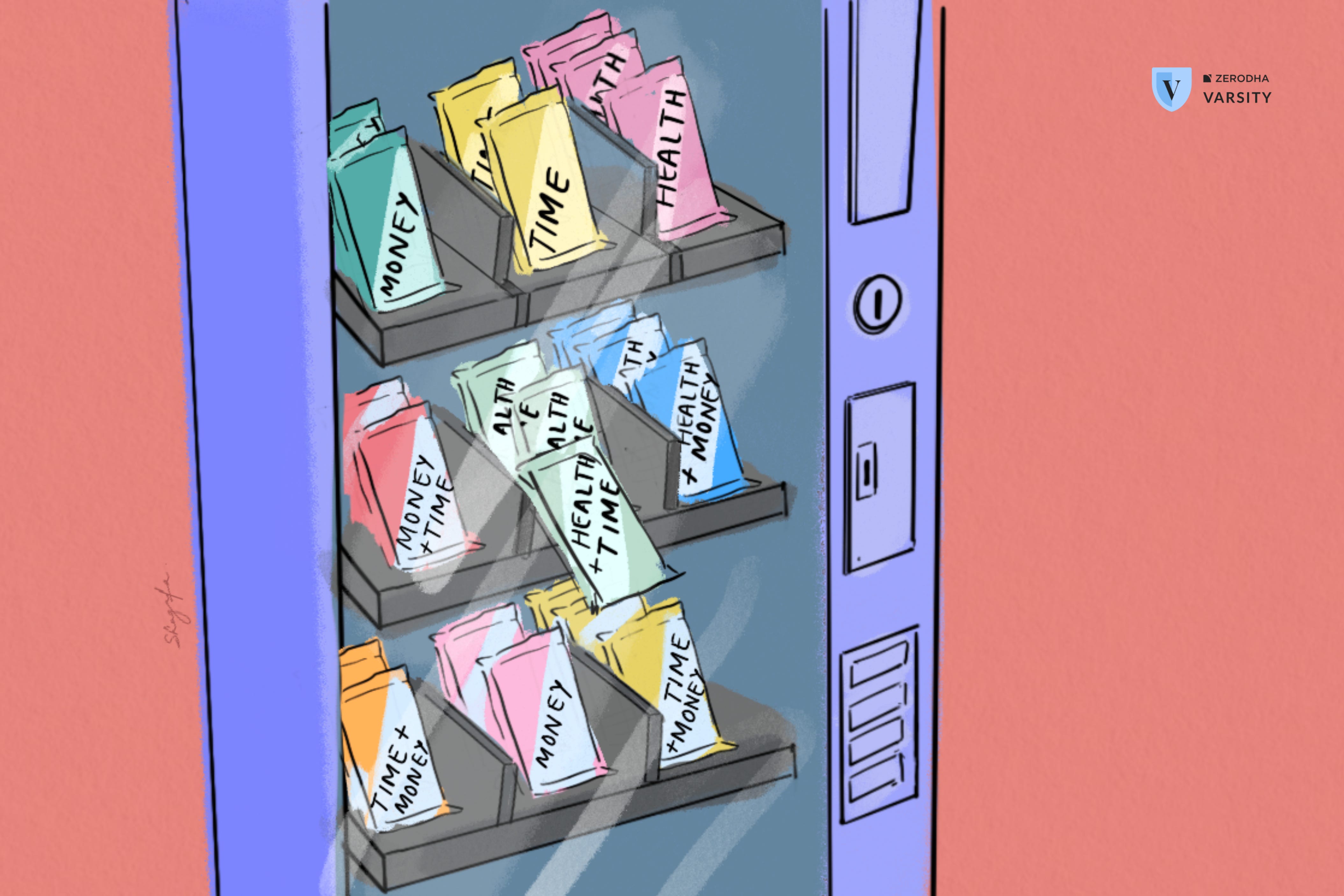
Money, health, and time: the three things that never line up
If we keep saving for our silver years, there are so many things we could do in our 20s and 30s that we simply can’t do at 60. The trekking trip, the backpacking adventure, the physically demanding stuff. That window closes whether you’re ready or not.
Perkins points out that at any point in your life, you have three resources: money, health, and free time. They almost never peak together. When you’re young, you have health and time but no money. In your working years, you have money and health but no time. After retirement, you might have money and time, but your health is going.
His tool for thinking about this is a “time bucket.” Divide your life into five or ten-year chunks and list every experience you want to have. Then place each one where you’d enjoy it the most, based on your health, energy, and life stage.
The interesting part: he says to do this without thinking about money first. Don’t even bring money into it. Because the moment you ask, “Can I afford this?” you’ve already started cutting things before you even write them down.
To be honest, as a personal finance writer, this idea is very difficult for me to even put forward. But I’m just sharing the book’s perspective here.
And in your mid 30s to 50s, when you have decent health and money, you’d be most limited by time. His suggestion: buy time with money. Outsource the routine stuff, the laundry, the cleaning, the cooking on weekdays.
We often hear parents say they wish they’d spent more time with their kids when they were young, that they should have worked a little less. That’s what Perkins is getting at. Time spent with the people you care about, at the right age, is where your money has the highest value.
We never know when we’ll die, so shouldn’t we keep saving?
If you remember, in one of our previous newsletters, we talked about a controversial research paper that says that most young people should not save for retirement. Perkins’ argument is in a similar zone. Maybe it is okay to save less when you are young and make up for it later when your income can handle it.
He also points out that people save with fear. And this isn’t just theory. Some of the financial planners I’ve spoken to vouch for this: retirees genuinely struggle to spend from the nest egg they created, because they’re terrified of running out.
Perkins says: quantify that fear. Put a number on it. He suggests using life expectancy calculators to estimate how long you should plan for retirement.
I tried the one he mentions, livingto100.com, which was built by a researcher and is widely recognized. It asks about 40 questions: your diet, exercise, family history, stress, all of it. See, it’s not perfect; no single number can capture something this uncertain. But his point is that it gives you a starting point, which is better than saving as though you’ll live to 150.
Perkins’ point is that our spending in the later years would be significantly lower than what we imagine, even after considering higher medical costs, and we should account for it more realistically.
What about children and charity?
One important clarification: Perkins is not saying leave nothing for your kids. That’s not the argument. What he’s saying is, instead of thinking “whatever is left when I die goes to them,” decide earlier what their share is. Set it aside. That’s theirs, not yours. The rest is yours to spend on your life.
And don’t delay the giving. According to the US data he quoted, the most common age at which people received their inheritance was around 60. By the time your children get your money, they’re already old. That money would have been way more useful in their thirties, when they’re buying a home, raising young kids, and building a career. Give when they need it most, not whenever you happen to die.
If I’m right, you must be thinking this is not as easy as it sounds in India; it could be.
Anyways, even on charity, his point is: give when you’re around and can see the impact.
My take
A couple of things first. Perkins is clear that this book is not for someone who’s already struggling to make ends meet. If saving for basic needs is the challenge, you’re already balancing by necessity. He’s also not saying don’t save. His point is that most people who do save, save way past what they need, and fear is what’s driving it, not a plan.
Perkins points out that people work in autopilot mode even when they can pause and spend the money they’ve earned. Even if they love their job, the money earned must be used to bring more joy into what they do, or at least give to charity where they can see the impact while they’re alive.
One of the heart-touching points in this book was how he thought long and hard about spending a huge amount of money on his 45th birthday party, flying in friends and family from everywhere, because he knew both his parents were healthy enough to attend at that time. By his 50th birthday, his father had passed away and his mother’s health had declined. He had no regrets about spending that money at the right time.
Most of the arguments are convincing. That said, I have my questions.
Saving is a muscle. It takes years to build. Humans are animals of habit, after all.
I know people in my own family who probably haven’t saved enough for retirement in the traditional sense, but because they learned to live within their means, that discipline is what’s carrying them through.
But most young people still try to build that muscle. Telling them “spend on experiences” before the habit is formed could tilt things the wrong way. And when overspending turns into debt, and debt becomes a habit, that’s where it gets dangerous. The book doesn’t address this, and I don’t have an answer here either. I guess the more cliched word “balance” is what matters.
By the way, if you want to go by the way the book suggests, it requires doing some thinking and basic math on what you’d actually need and want in life and how much it costs.
So, die with zero? I think everyone would wish to leave with as little waste as possible. But there are no easy answers on how to achieve that.
What is clear from this book, though, is this: if you’re working to earn and not using what you earn, what’s the point of saving?
These are some ideas that stayed with me. I’d love to hear what you think. Write back.
This newsletter was written by Satya Sontanam.
Do read Will India’s stock market talk the economy into a slowdown? newsletter on our Tell Me Why by Zerodha Varsity.
For any feedback or topic suggestions, write to us at varsity@zerodha.com.
Zerodha Varsity is now on WhatsApp. Follow on to keep track of all things Varsity across platforms.
I have already read this book and as you mentioned the "BALANCE IS THE KEY".
Read it a while back. The post is a good refreshment.